【1】Origin: “Fu no Yaki” in the Azuchi–Momoyama Period
• In the 16th century, a wheat-flour dish called “Fu no Yaki” or “Rikyū-yaki” appeared as part of tea ceremonies hosted by Sen no Rikyū.
• It was a simple dish made by mixing flour with water, grilling it, and spreading miso on top — considered the prototype of modern okonomiyaki.
• At that time, it was not a staple food but served more as a snack or light meal.
【2】Edo Period: From “Monji-yaki” to “Monjayaki” and “Dondon-yaki”
• In the late Edo period, a dish called “Monji-yaki” emerged among common people, later evolving into Monjayaki.
• The practice of dissolving flour in water and cooking it on a griddle became established.
• It spread as a part of children’s snack culture, enjoyed at candy stores and small local shops.
【3】Taisho to Early Showa Period: Birth of “Issen-Yōshoku”
• During the Taisho era, “Issen-Yōshoku” (“one-sen Western-style food”) appeared in the Kansai region.
• It was made by adding cabbage and pickled ginger, grilling the mixture, and topping it with sauce.
• The name comes from the idea of a Western-style meal that could be eaten for just one sen — a treat for ordinary people.
• This Issen-Yōshoku is considered the direct ancestor of modern okonomiyaki.
【4】Postwar Period: Nationwide Popularity
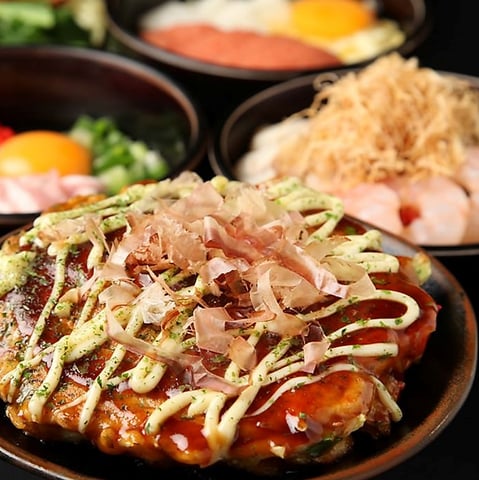
• After World War II, during a time of food shortages, okonomiyaki became widespread as a meal that could be made with easily available ingredients like flour, cabbage, and potatoes.
• It became common to cook it with ingredients “as you like” at home, street stalls, and snack shops, leading to the name “Okonomiyaki”.
• The development of Japanese-style sauces (especially Otafuku sauce) became a key part of its flavor.